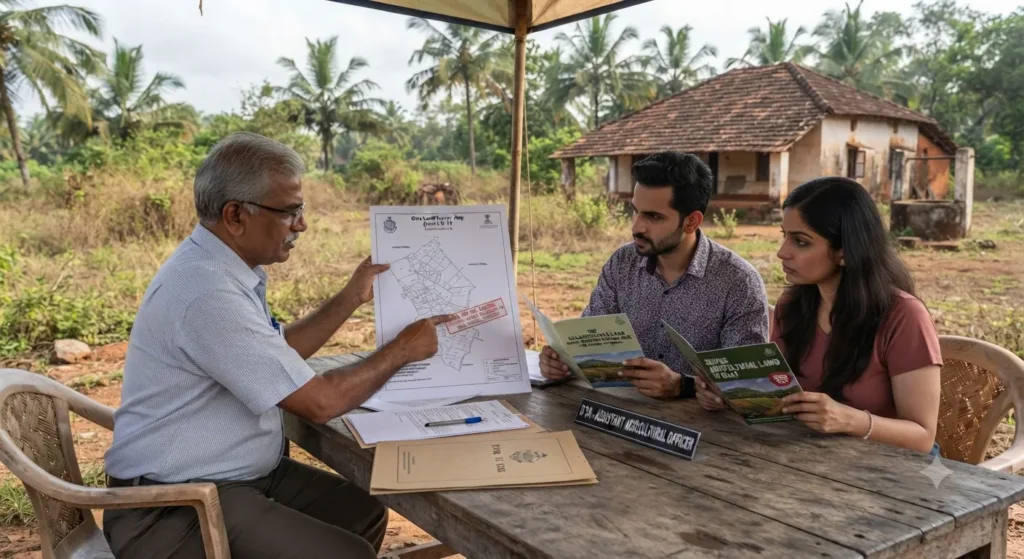
Buyers have increasingly turned their eyes to Goa’s agricultural land where they can find bigger plots, traditional villages and can get long term real estate investment. But the purchase of agricultural land in Goa is not similar to the purchase of a residential plot or apartment. When making a token payment or signing an agreement, it is particularly critical that the non-farmer understand the restriction on land transfer that may apply.
The restriction on transferring agricultural land in Goa has taken a new form in the topic Buying Agricultural Land in Goa as a Non-Farmer, as alterations and restrictions on land transfer rules may impact who can hold agricultural land legally.
Is There Any Possibility Of Non-Farmers Buying Agricultural Land In Goa?
One common misconception is that if a farmer wants to sell the land to anyone, land can be bought by anyone in Goa. Making that assumption can be dangerous.
There are certain laws or land-use measures applicable to agricultural areas. A non-farmer may not be allowed to acquire agricultural land based on the nature of the land, the status of the buyer, the applicable laws and permissions needed.
Buyers should not solely depend on the sale agreement, property card or seller’s statement. Property classification may be verified independently, as should the buyer’s eligibility, prior to proceeding.
Understanding The 2023 Restriction on Transfer
The Government of Goa has witnessed a change in the legal framework relating to agricultural transfers. The 2023 changes and restrictions have come under the spotlight as it can impact the sale of agriculture land to individuals who are not agriculturists.
Such restrictions have a general link to the protection of agricultural land and the transfer and use of agricultural land. The extent to which it may apply, however, will vary in the specific circumstances of the property and transaction.
The key takeaway for the buyer is: a registered owner and clear-looking documents does not automatically mean that an agricultural property can be transferred without restriction.
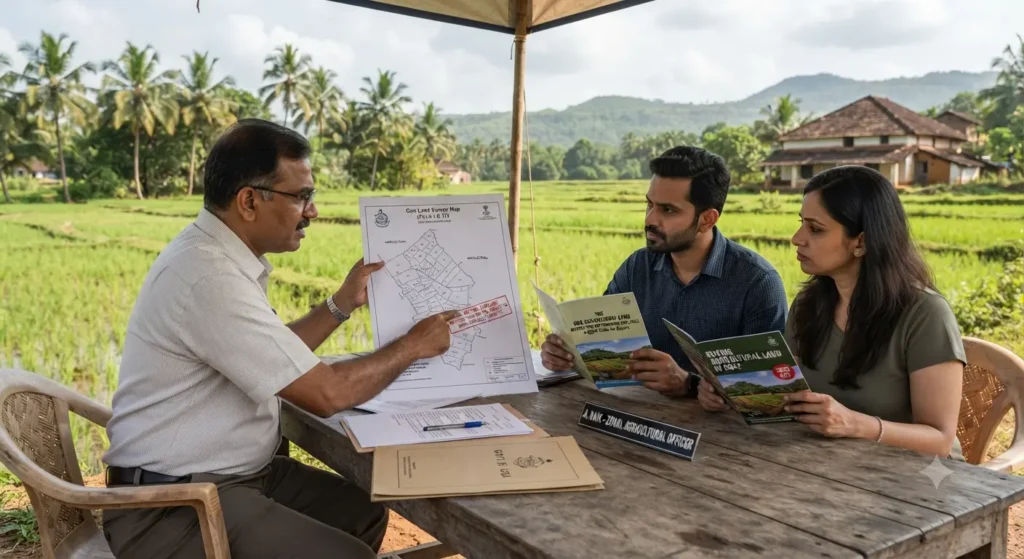
The Importance Of Land Classification.
Get a thorough understanding of the official classification of the land before buying it.
The term “parcel” can refer to a “farm plot” or an “agricultural property” but should be identified by the government records.
Purchasers should review the following documents:
- Survey records
- Form I & XIV
- If applicable, put up Property Card.
- Mutation records
- Title documents
- Previous registered deeds
- Land-use records
- Encumbrance information
- Zoning or planning records that are applicable
These can be used to help establish ownership, classification, possession and recorded land-use status.
It is important for non-farmer buyers to be extra diligent in their due diligence of agricultural properties.
However, for a person who is not a farmer, due diligence should not stop there, as the person may need to know whether a sale deed was obtained by the seller or not.
The buyer should determine first if the proposed transaction is legally allowed. Before committing funds, determine eligibility, permission, or exemption (if necessary).
So this is especially important for those who buy property from outside Goa who are not aware of the land laws and administration in Goa.
Restrictions in terms of construction or conversion may also apply to a property sold as a “farmhouse plot”. There is not a right to a residential farmhouse upon the purchase of agricultural land.
The Agricultural Land is not automatically considered Residential Land.
The most frequent error that buyers make is to mix up the ownership of the land with the rights to develop it as a home.
Planning regulations, zoning restrictions, conversion approvals and other approvals may continue to apply to construction and development, even after land has been legally acquired.
Before buying, ask:
- How is the land currently zoned?
- Is the buyer eligible to purchase it?
- Is any government permission required?
- Is it legally possible to make the land available to someone other than a farmer?
- What type of use is allowed on the land?
- Is there any prospect for building on the site?
- Is conversion required?
- Do there exist access, tenure, comunidad or other title problems?
These questions can be answered without any surprises later on that are costly.
Please Don’t pay The Token Money Before Verification.
While a token payment might seem to be a way to secure the ownership of a property, it can cause problems if it’s needed later for permission or if it can’t be performed legally.
Buyers should seek professional opinion in the form of a Goa property lawyer or professional to review the title and transferability of the property before making a significant advance payment.
The agreement should also specify what will happen to the advance in the event that the transaction does not obtain a legally required approval.
Why Professional Legal Verification is important.
Property transactions in Goa are often complex and regulated, with multiple layers of documentation. A professional review may be helpful in discovering potential problems not apparent in a simple title search.
With respect to farmland, the review should address, among other things, the buyer’s eligibility, transfer limitations, classification of the land, title history, encumbrances, zoning and intended use of the property.
This is especially significant if the desired property is a farmhouse, a second residence, an investment or for future development.
Conclusion
So, one cannot simply purchase Goa agricultural land law 2023 as a non-farmer without more than just an appealing piece of land and a negotiation regarding the price. The buyer is required to first determine the legal permissibility of such a transfer and whether such use is permitted.
Due to the restrictions on transfer 2023, it is especially crucial to check the law and the buyer’s eligibility before making any transfer. These could include land records, title documents, classification, permissions and development regulations.
Anyone interested in acquiring land for agricultural purposes in Goa will be wise to do due diligence including legal and land-use before converting the token money or agreeing to the unconditional agreement. While a home’s location and price can make it appealing to a prospective buyer, its legal standing is what ends up deciding whether or not it can be sold safely.
Frequently Asked Questions
1. Can a non-farmer buy agricultural land in Goa?
A non-farmer cannot assume that agricultural land can be freely purchased in Goa. Transfer restrictions and eligibility requirements may apply depending on the property and the applicable law. Buyers should verify their eligibility and any required permissions before entering into the transaction.
2. What is the 2023 restriction on the transfer of agricultural land in Goa?
The 2023 legal changes relating to agricultural land transfers introduced or reinforced restrictions concerning the transfer of agricultural land. The applicability depends on the specific transaction, land classification, and status of the buyer. Professional legal verification is recommended before proceeding.
3. Does being an Indian citizen allow me to purchase agricultural land in Goa?
Indian citizenship alone does not necessarily establish eligibility to purchase every type of agricultural land. Agricultural land may be subject to specific state-level restrictions and conditions. Buyers should check the property’s records and applicable transfer rules.
4. Can an outsider purchase agricultural land in Goa?
A person from outside Goa should not assume that agricultural land can be purchased without restrictions. The buyer’s status, the classification of the property, and applicable laws should be examined before signing an agreement or paying a token amount.
5. What documents should I check before buying agricultural land in Goa?
Important documents may include the title deed, previous conveyance deeds, Form I & XIV, mutation records, survey records, property card where applicable, encumbrance information, and relevant land-use or zoning documents. A lawyer should verify the complete title chain and transferability.
6. Can I build a farmhouse on agricultural land in Goa?
Purchasing agricultural land does not automatically provide permission to construct a farmhouse. Construction may require compliance with applicable zoning, planning, land-use, and building regulations. Buyers should confirm development permissions before purchasing the property for residential or farmhouse use.
7. Is land conversion required for using agricultural land for residential purposes?
It may be required depending on the proposed use and the property’s legal and planning status. Agricultural land should not be treated as residential property simply because the buyer intends to build a house on it. The applicable conversion and planning requirements should be verified before purchase.
8. Should I pay token money before checking whether I am eligible to buy the land?
It is generally safer to complete the eligibility, title, and transferability checks before making a significant payment. If the transaction requires permission or is legally restricted, an advance payment can create avoidable complications.
9. What are the biggest risks of buying agricultural land in Goa as a non-farmer?
Potential risks include restrictions on transfer, defective title, incorrect land classification, pending disputes, unclear access, unauthorized construction, zoning limitations, and inability to use the property for the intended purpose. Proper legal and land-record verification can help identify these issues.
10. Should I consult a lawyer before buying agricultural land in Goa?
Yes. Because agricultural land transactions can involve specific transfer restrictions, land-use regulations, and documentation requirements, a Goa property lawyer can review the title, buyer eligibility, applicable permissions, and intended use before you commit to the purchase.